Alaia Surfboards
A breif history of Tom Wegener and the Alaia Revolution
Tom visiting ancient boards at the Bishop Museum, Hawaii. Note: the perfect shaped alaias
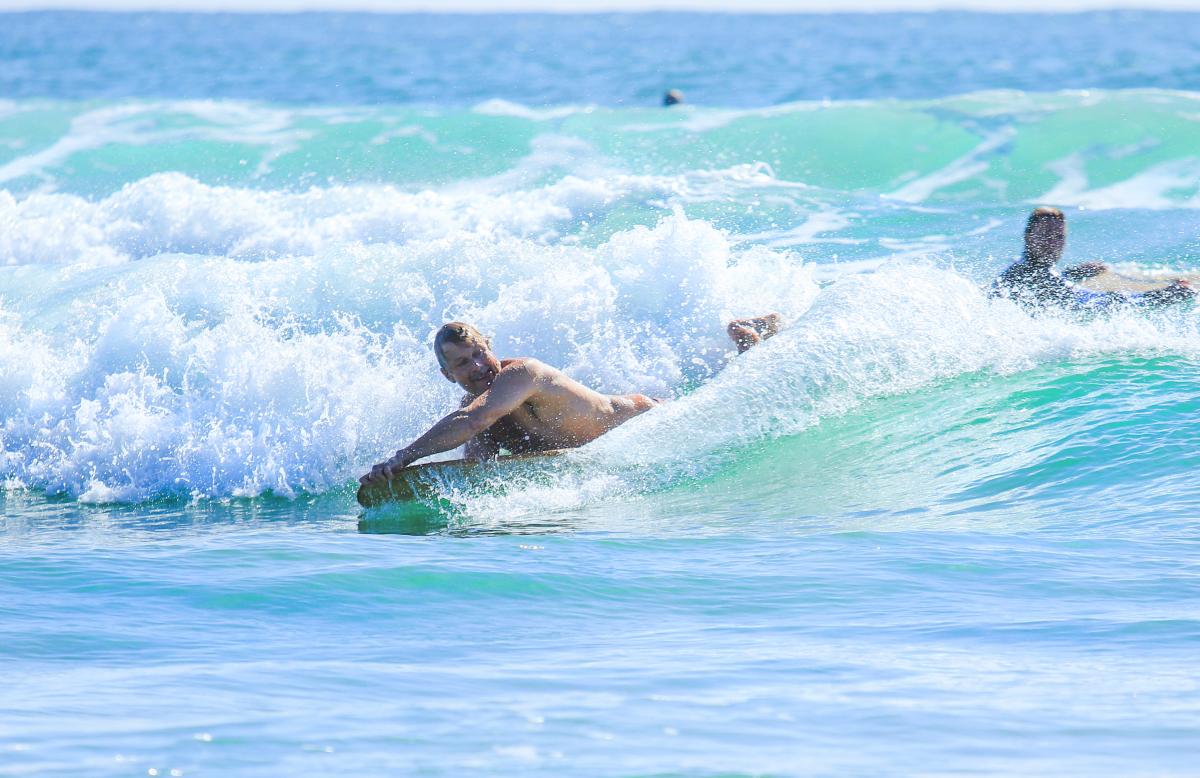
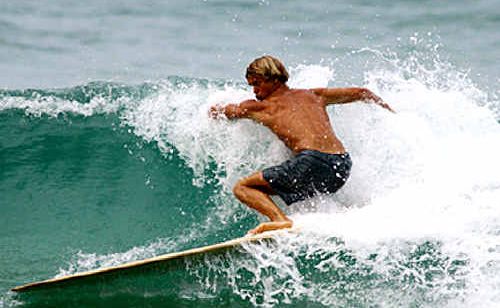
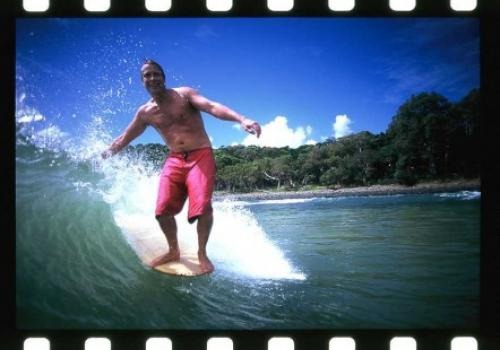
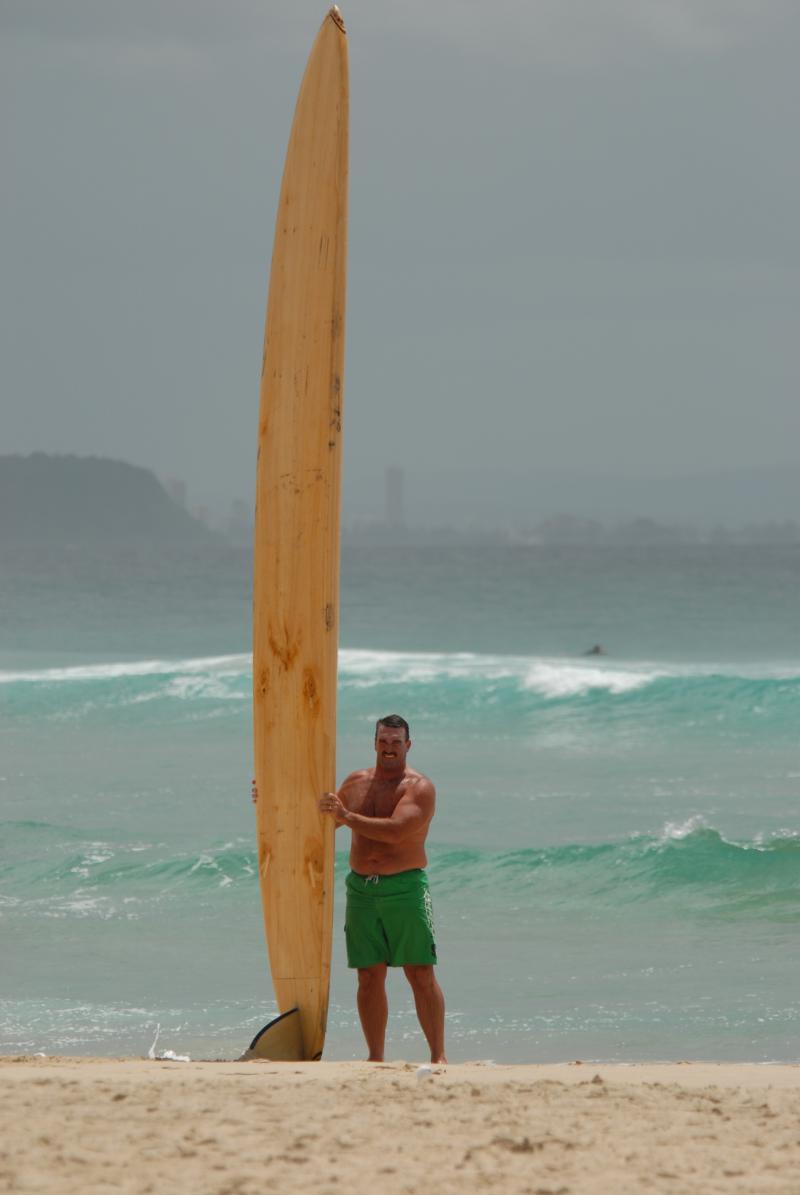
The Alaia is a thin wood surfboard used by the ancient Hawaiians. Although it was their most popular surfboard for hundreds of years, it virtually disappeared from history for the entire 20th century (1900 -2005). Because the surfboard is very thin, never more than one inch or 24mm thick, it is difficult to paddle and because it has no fins it was thought that it could not angle across a wave. A few alaias had been kept in Honolulu’s Bishop Museum and the surf form was largely forgotten by modern surfers.
I went to visit the ancient surfboards in the Bishop Museum in April 2004 and I was astonished by the perfection of the shapes. Having made wood surfboards for a few years prior, I could see that each board was a masterful product specifically made custom for the surfer. I had no idea how the boards surfed but I could see there was something there that I did not understand.
It was not until March 5 2005, on my 40th birthday that we officially launched the alaia. We had a big gathering on the point with kilos of prawns and slabs of cold beer. I had made two ancient Hawaiian surfboards, a 10’ alaia and a 16’ Olo, and there was a large assortment of my regular wood boards. Everyone was welcome to ride the boards. The surf was chest high and bumpy, making the Olo extremely difficult to surf and nobody had even looked at the alaia. Then Jacob Stuth took the alaia out for a paddle. Many of us watched as we figured he would slide sideways towards shore and get bounced around on the rocks. To our astonishment he caught a clean double up and shot across that wave faster than we imagined he could. He went far faster than he would have on a finned board. Our minds were blown! It brought me back to Hawaii where I saw the ancient boards and felt again that there is another world of surfing that existed and we know nothing about it.
2005: my first alaia quiver and 16" olo
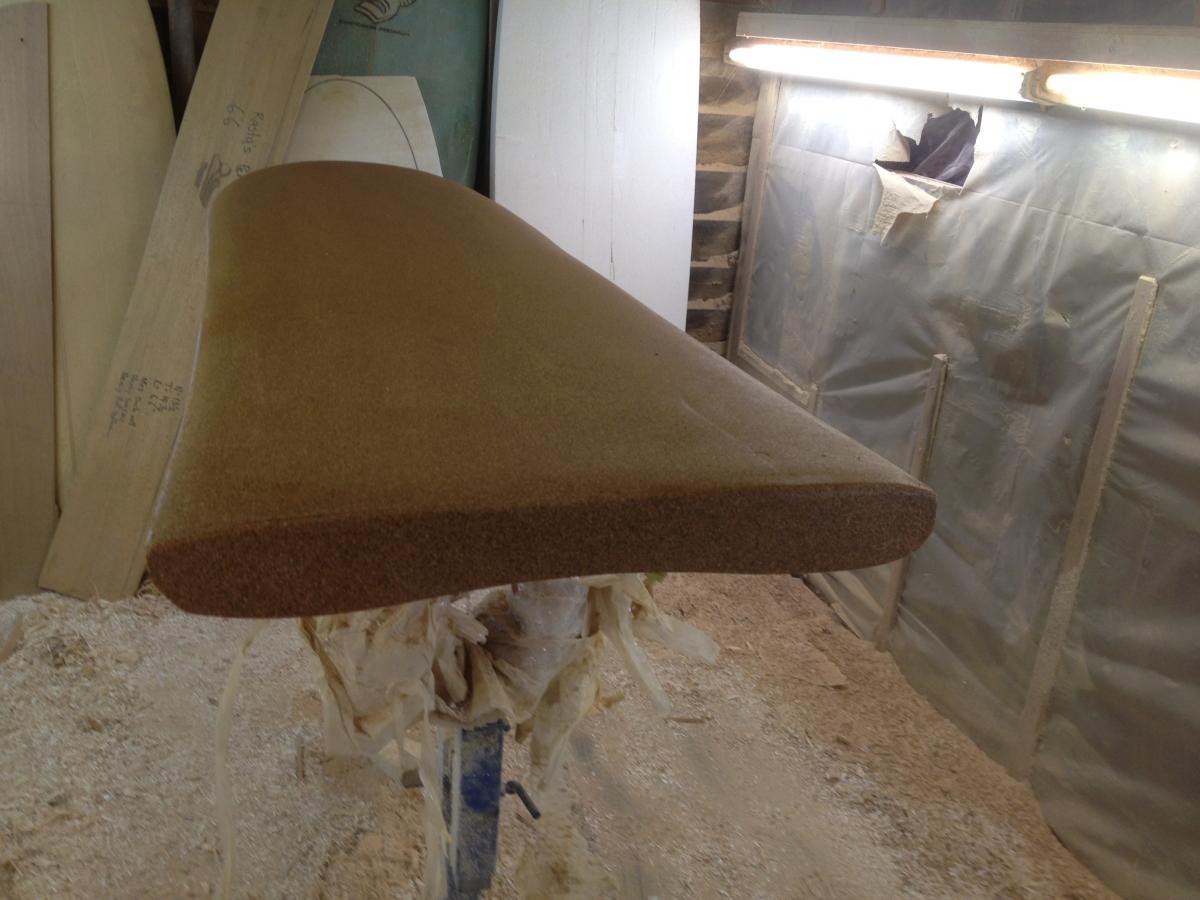
For the next two years Jacob and I were obsessed with figuring out how the alaia works. The ancients had surfed the alaia in heavy waves like Sunset Beach. How did they shape the boards so they would surf those waves? We slowly began to unlock the secrets with endless experimentation. I would start by making a big alaia that was very heavy and difficult to paddle and then shape it over and over until it was a small belly board. The first secret was flex. The board would hang in a steep pocket so if it flexed. There was a proper flex which seemed magical. Too much or too little and the board did not work well. One other evolution happened by accident. Jacob’s favourite board twisted or cupped a bit. That is the rounded board now had a concave through the bottom. I said I would shaped it out to make the bottom rolled again but Jacob said it surfed better with the concave.
The next evolution came when we were studying this photograph.

- I beleive that this guy wanted to show us his surfboard – which was forgotten for just over 100 years.
I had just glued up a 9’1 alaia blank for Jacob and we were thinking of the shape. Again, were still perplexed with how the alaia could hold into a steep face. When looking at this photo we could see that the Hawaiian was a real surfer. You can just tell by his stance. Jacob noticed that the tail was not flat and it that looked like that because there is a concave! Then we started to look at the template and we noticed that the rails were parabolic. The tail flares out just a little, like a modern snow board. WOW! That was it. We copied the ancient board as best we could and that afternoon Jacob was ripping across the points with a new grace and confidence in the steep fast waves.
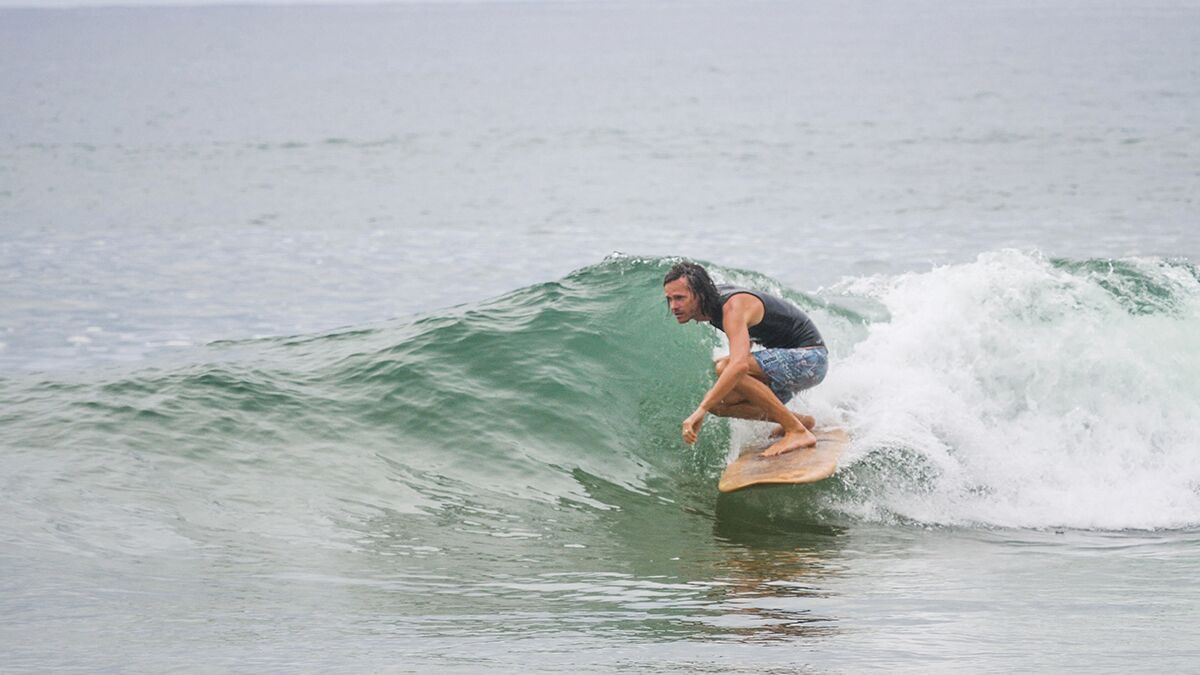
2006 : Jacob Stuth learns what the ancient Hawaiians meant by La La, the controled slide in the pocket
From there the alaia story grew and grew. At that time there was only Jacob and I. Soon there were top surfers taking up the challenge and Thomas Campbell and Nathan Oldfield were hot to film them. There was a little explosion of excitement. In 2009 Surfing Magazine named me “Shaper of the Year” for bringing back the alaia. Now the alaia is a common board with its own division in the Australian National Titles. It has been a dream come true for me to see the alaia reassert itself as a great surfboard.
Philosophy of the Alaia – Step light but stand tall
The alaia is a very environmentally friendly surfboard. It comes from plantation grown trees, often organically grown, and available in more and more countries. The unused parts of the tree are mulched and on-sold and the leaves are fed to cattle. Manufacturing the soft, light timber uses a minimal amount of fossil fuel energy and the only petrochemical by-products in the finished surfboards are found in the small amount of glue used. The surfboard is sealed with linseed oil, gum turpentine and bees wax. When it has finally come to the end of its use it disappears back into the earth. In this way this surfboard steps lightly on the planet.
In ancient times kids learned to ride waves on the shortest surfboards. This way they learned swimming skills and how to work with broken waves. As the surfers progressed in skill they moved to longer surfboards and learned to stand on them. It is unlikely that anyone of our time will fully comprehend how good the ancients could surf, but from what I have seen in my years of riding the alaia, I suspect that the ancients were impressive, to say the least. Now, people start surfing on long boards that are very easy to ride. Angling is simple with a finned board and skill is thoroughly compromised with the leash.
Riding the alaia, the surfer is in a totally different mindset. You feel so much closer to the natural environment. The surfing is on a more universal scale. On modern equipment you may catch more waves and feel like you “rip,” but are you surfing better? Better than what? Riding the alaia brings a new level of difficulty which, at the outset, turns most people off. But lots of the world’s best surfers find that this brings more excitement and joy to their surfing. When surfing the alaia you are more eye to eye with nature and standing tall.
The alaia surfboard will last many years, if cared for. Each one is worthy of a name, but it disappears without a trace in the end.
The shape is so simple that it is hard to see how the surfboard works, but each curve is of maximum importance. Each millimeter of roll, concave, thickness and curve makes a big difference to how the alaia rides. This surfboard needs care with oiling and sometimes some sanding or repair work, but it will take a lot of abuse and can last a lifetime. A good surfboard is of great value because you can get so many years of enjoyment from it. An alaia, which you can love for a long time and then bury, can be relatively inexpensive at the outset.
For inquiries on custom Alaias contact Tom
Karl Seahouse with a large plantation grown paulownia tree

Comments on this entry are closed.